Key takeaways
- Gather receipts, carton labels, product codes, spare boards, and photos before searching for replacement stock.
- Compare species, width, thickness, edge profile, finish, and physical fit. Similar color alone is not enough.
- Confirm stock with the seller and compare actual boards beside your floor before committing to material.
- Ask about flooring moisture, substrate condition, indoor conditions, and the replacement product’s installation requirements.
- Mike sources the same product or the closest available match. He does not sand, stain, refinish, or finish unfinished flooring.
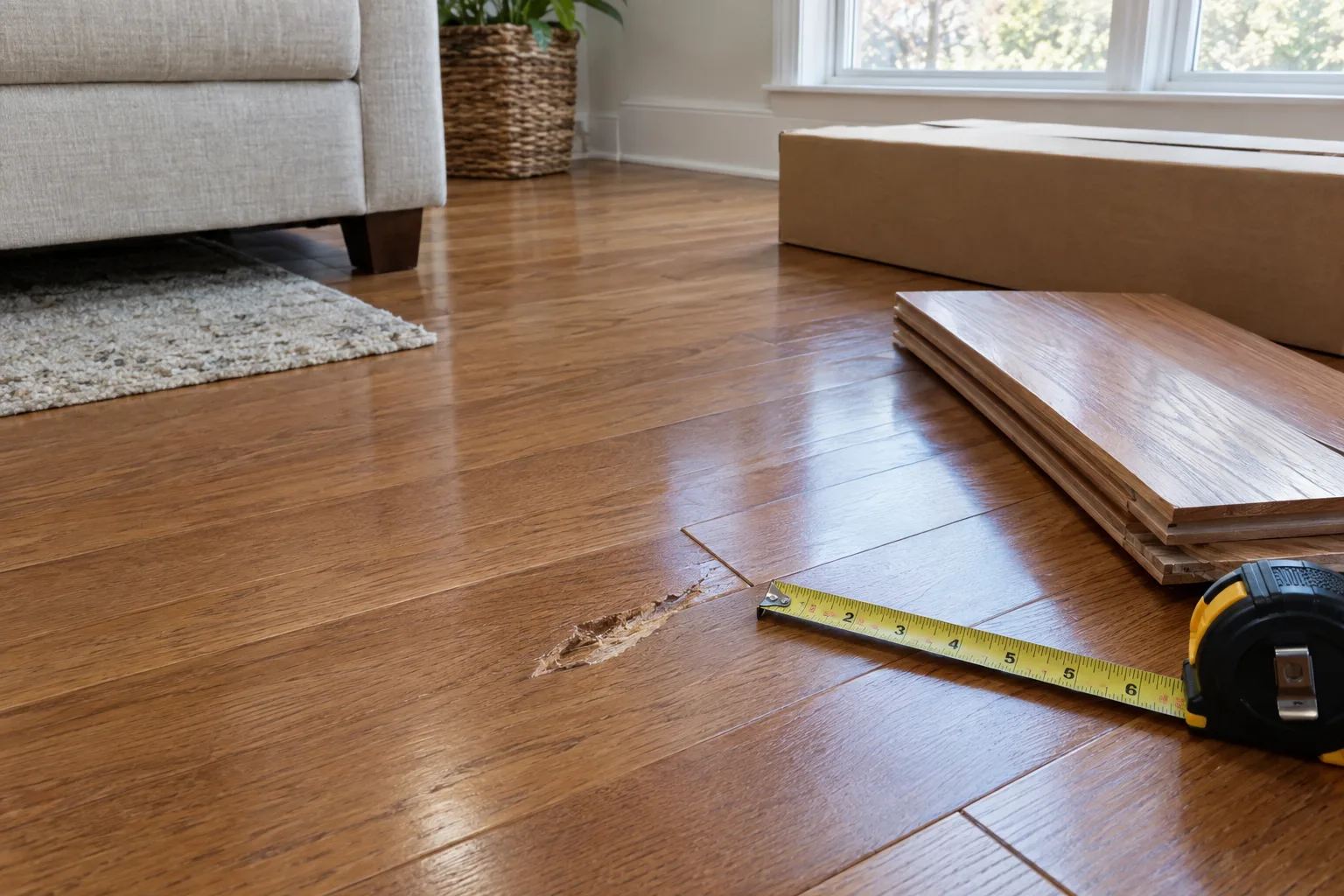
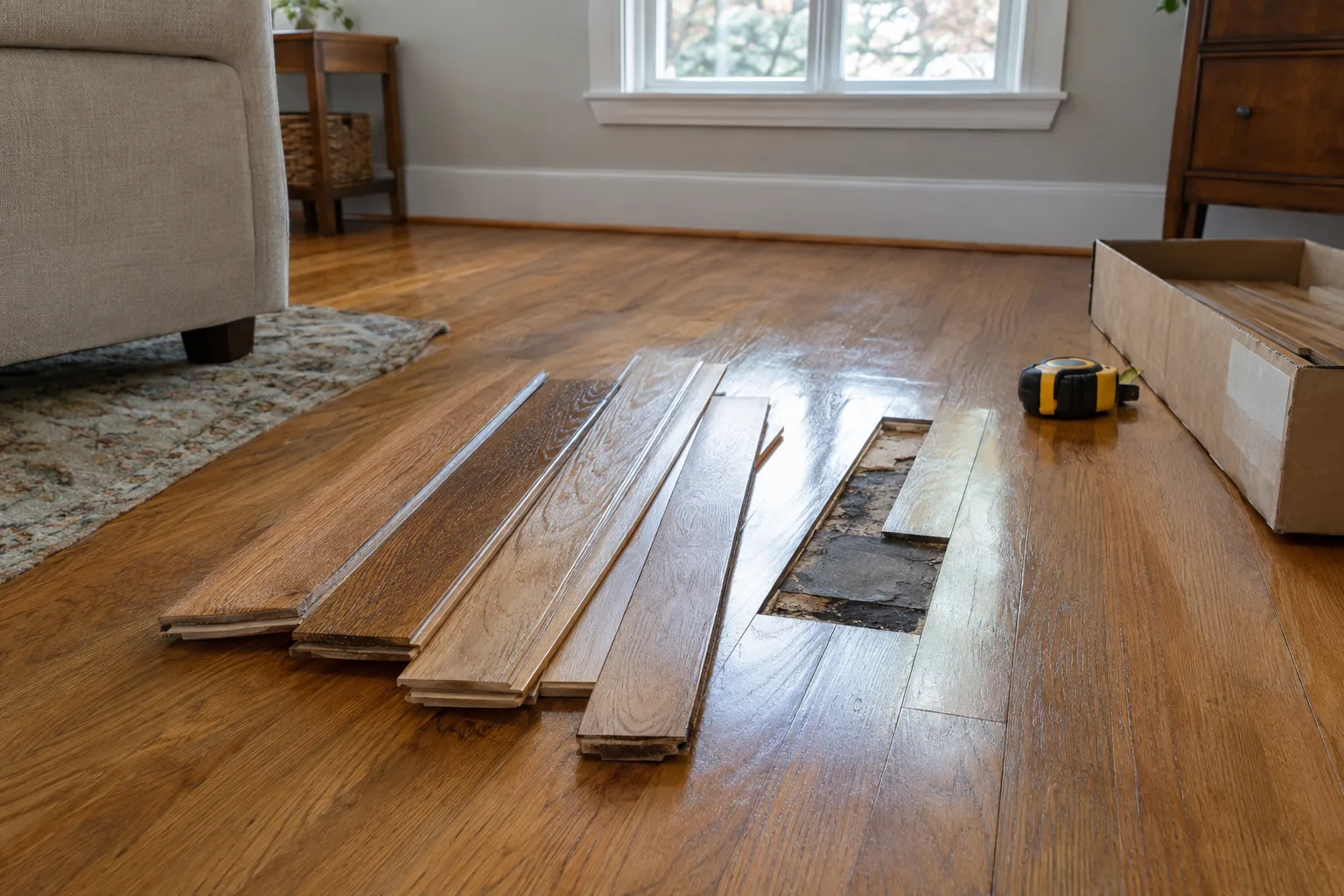
Before you buy similar-looking boards, identify your existing floor and check replacement compatibility. Discontinued hardwood flooring repair depends on more than color. Compare species, width, thickness, edge profile, sheen, and finish before damaged boards come out.
The National Wood Flooring Association installation guidelines call for selecting replacement material before starting removal. That gives you a chance to check both fit and appearance before committing to a repair.
For your home near Taneytown, the first question is whether suitable material exists. The next is whether you can accept how it looks beside your existing floor.
What information can you find before calling?
Start with what you already have. A product code can narrow the search much more than a description such as “medium-brown oak.”
Use this preparation checklist:
- Original receipt or installation paperwork.
- Carton labels showing the brand, collection, product code, and color.
- Spare boards or unopened cartons.
- Photos of the whole room and damaged area.
- Close-ups of the damage and any accessible board edges.
- Notes about when the damage appeared and any known leak or spill.
Keep each label with the material it identifies. If you have leftovers from several rooms, do not assume every carton belongs to the damaged floor.
You do not need to remove a board just to prepare for a call. Photograph an accessible edge or spare piece if you have one. Leave concealed conditions and uncertain measurements for assessment.
This is a practical checklist to help you prepare, not a requirement to gather every item before contacting Mike.
Where should the search start?
Check saved material first. Spare boards may provide the exact product, but their condition still matters. Look for damaged edges, distortion, or signs that the cartons were stored somewhere damp.
Next, contact the original retailer or manufacturer with the product code. Ask whether stock remains and whether the product was renamed or replaced. A familiar color name does not establish that a newer product has the same dimensions or construction.
Treat an online listing as a lead, not confirmed inventory. Before buying, ask the seller to verify:
- The product code on the actual cartons.
- Available quantity and board lengths.
- Whether cartons are unopened, mixed, or partly used.
- Dimensions and material condition.
- Whether the material can be returned if it proves unsuitable.
The NWFA guidelines allow replacement boards from another manufacturer when the required physical details match. A different brand is not automatically ruled out. It still needs a careful compatibility check.
What does the closest available match mean?
Mike looks for the same product or the closest available match in the same species, width, thickness, and finish. Physical fit also needs checking. Similar color alone does not mean two products will work together.
Use these comparisons to keep your search focused:
| Detail | What needs checking |
|---|---|
| Species | Whether the replacement is the same wood species. |
| Width and thickness | Actual dimensions rather than a broad product description. |
| Construction | Whether the existing floor is solid or engineered. |
| Edge and connection profile | Whether the replacement can fit the existing installation. |
| Finish and sheen | Whether the surface appearance is acceptable beside your floor. |
| Color and grain | How actual boards look in your room. |
A board can look close but sit at the wrong height. Another can fit physically yet leave a noticeable patch. Both issues matter before installation starts.
Do not buy unfinished boards expecting Mike to change their appearance. Mike does not sand, stain, refinish, or finish unfinished flooring. His repair approach does not use those methods to blend boards.
Why can the same product still look different?
Your installed floor has been exposed to light and daily use. Boards stored in a carton have had a different history. Even the same product may not look identical beside your floor today.
Mirage’s guidance on oxidation and color variation explains that light exposure and aging change wood color. The direction and extent of that change depend on the wood and its exposure.
Compare actual candidate boards beside your existing floor. Look in daylight and under the lights you normally use. Check from standing height and the main doorway, not only from directly above the patch.
Photos help narrow the search, but they do not settle appearance. Ask how you can arrange a physical comparison before committing to material. Do not assume a visible difference will disappear with time.
What should be checked before installation?
Finding suitable stock does not mean the floor is ready for repair. This matters especially after a plumbing leak, appliance leak, or repeated wetting.
For a repair in Taneytown, Westminster, Littlestown, or another nearby town, ask about:
- Moisture in the existing flooring and replacement boards.
- Subfloor moisture and condition.
- Whether the source of water has been corrected.
- Indoor temperature and humidity.
- Board fit, floor height, and the extent of damage.
- The selected product’s installation requirements.
The NWFA guidelines base water-damage decisions on flooring, substrate, and ambient moisture conditions. Dry-looking boards alone do not answer every question about the area beneath them.
The Bruce engineered hardwood installation instructions also require suitable site conditions and subfloor moisture checks. Follow the instructions for the actual replacement product rather than applying one waiting period to every floor.
Ask whether surrounding boards or the substrate may also be affected. Replacing visible damage without addressing its cause can leave the underlying problem unresolved.
Where can you choose replacement material?
If the original stock cannot be found, you can select hardwood at Baltimore Floor Works, 142 Railroad Ave., Westminster, or at Lowe’s or Home Depot. A product sold there still needs checking against your existing floor before you buy it for a patch.
You can purchase the selected material yourself, or Mike can order the floor you picked, usually through Baltimore Floor Works. Mike does not bring samples to your house.
Keep product labels and specifications for any candidate you choose. They give you something more useful to compare than a color name or a photo on your phone.
What if the available match is not acceptable?
Separate a workable fit from an acceptable appearance. You may accept a visible repair in a less noticeable spot but not in the middle of an open room.
Compare two options:
- A localized repair using compatible boards, with the visible difference understood before work starts.
- A defined replacement area, such as a room ending at a doorway, when suitable repair boards cannot be found or the patch would be too noticeable.
A larger replacement needs its own plan for transitions, floor height, and material quantity. Read about hardwood floor replacement if the search does not produce an acceptable repair option.
Mike has 31 years of floor installation experience, counted from 1995, and serves about 50 miles from his Taneytown office. To discuss your options, visit the hardwood floor repair page or call or text (410) 259-7094. Leave a voicemail if nobody answers.
Current rates are on the pricing page. The estimate tool shows a preliminary range that is not a contract.
Questions people ask
Can discontinued hardwood still be repaired?
Sometimes. Suitable replacement material, the condition beneath the floor, and your acceptance of any visible difference all affect the decision. Select compatible material before removing damaged boards.
Can replacement boards come from another manufacturer?
Possibly. A different brand is not automatically unsuitable, but species, dimensions, construction, edge profile, finish, and physical fit need checking. Similar color alone is not enough.
Where can you choose replacement hardwood?
You can choose hardwood at Baltimore Floor Works, 142 Railroad Ave., Westminster, or at Lowe’s or Home Depot. You can buy it yourself, or Mike can order the floor you picked, usually through Baltimore Floor Works. Mike does not bring samples to your house.
Can Mike change the finish to make replacement boards match?
No. Mike does not sand, stain, refinish, or finish unfinished flooring. His repairs depend on sourcing the same product or the closest available match in species, width, thickness, and finish.
Sources
- NWFA Wood Flooring Installation Guidelines, revised 2025, especially Repair, Replacement and Removal
- Bruce Engineered Hardwood Installation Instructions
- Mirage Technical Newsletter: Oxidation and Color Variations in Hardwood Floors
- How to Refinish 100-Year-Old Wood Floors and Not Replace Them
- How To Refurbish Worn Spots On Finished Hardwood Floors
- Replacing Damaged Hardwood When the Original Flooring Is Discontinued