Key takeaways
- Total thickness measures the full flooring product. Wear-layer thickness measures the clear layer over the printed design.
- Millimeters and mils are different units. One mil is one-thousandth of an inch.
- A thicker wear layer is not a complete scratch-resistance rating.
- Compare product documents, then check floor height, subfloor conditions, moisture requirements, and installation details.
- Do not add underlayment or assume a thicker plank will correct an uneven base.
Total plank thickness and wear-layer thickness measure different things. Neither number alone tells you whether an LVP floor suits your room. Compare the product specifications, then check the installation requirements against conditions in your house before ordering.
For homeowners near Taneytown, that means looking beyond the largest number on the sample label. A floor must fit your doorways, adjoining floors, subfloor, and intended use. Mike’s vinyl plank installation service explains the service available for your planned job.
What is the difference between LVP thickness and wear layer?
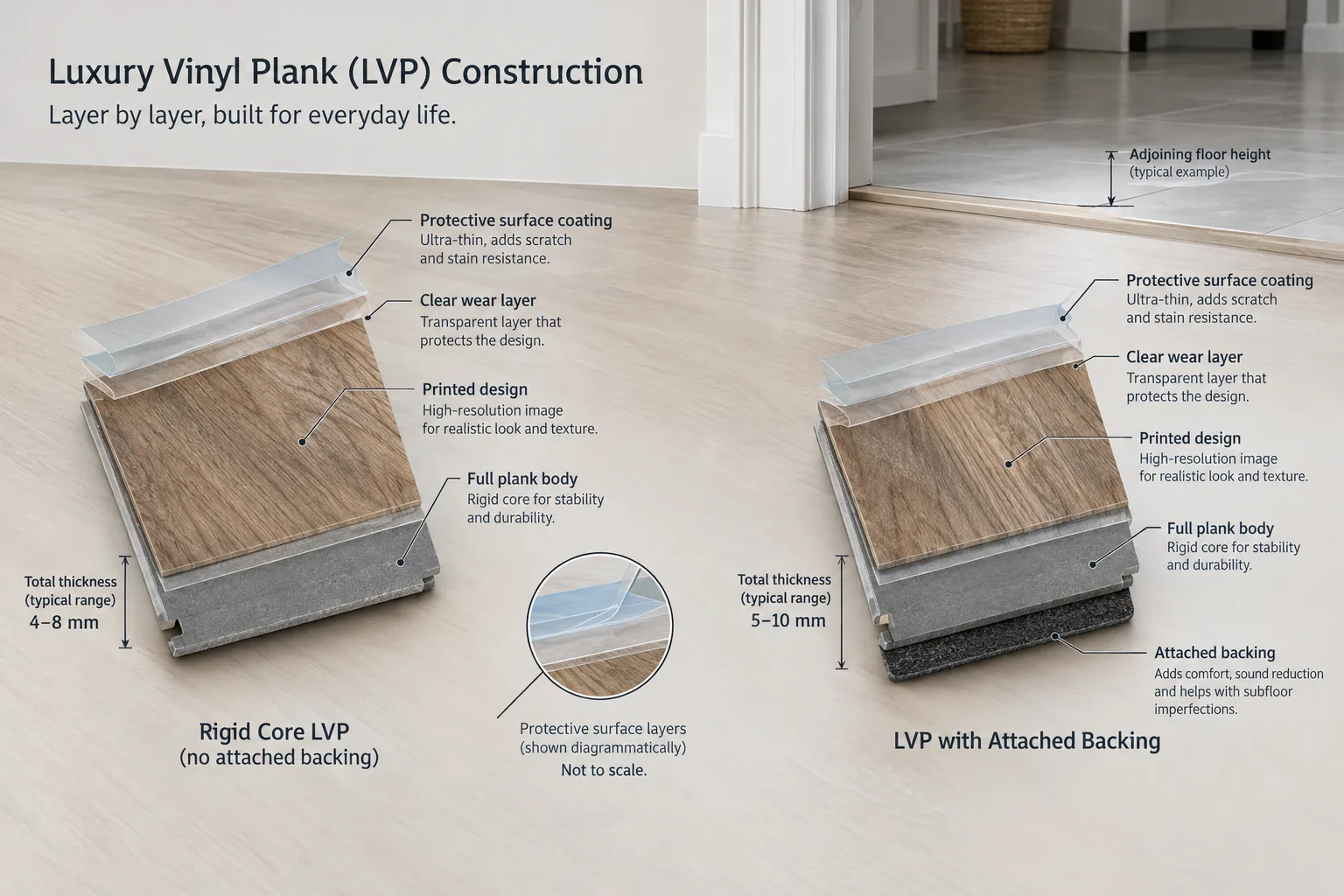
Total thickness describes the full flooring product. It is usually measured in millimeters, shown as mm. Check whether that measurement includes an attached pad.
The wear layer is the clear layer over the printed wood or stone design. It is commonly measured in mils. One mil is one-thousandth of an inch, not one millimeter.
These numbers describe different parts of the floor. You cannot compare them as if they were competing scores.
| Specification | What it describes | What you should check |
|---|---|---|
| Total thickness | Full product thickness | Whether attached pad is included |
| Wear-layer thickness | Clear layer protecting the design | The stated mil measurement, if applicable |
| Protective coating | Surface treatment above the wear layer | The coating description and care instructions |
| Core construction | The body of the plank | Product type and installation limits |
| Attached pad | Backing supplied with the plank | Whether additional underlayment is allowed |
Mannington’s explanation of luxury vinyl construction describes a clear wear layer and a urethane coating above it. Record these as separate details when comparing products.
Can a thinner plank have a substantial wear layer?
Yes. Total thickness does not tell you how thick the wear layer is.
For example, the Mannington City Line specification sheet lists a total thickness of 2.5 mm and a wear layer of 20 mil. That shows how a relatively thin product can have a substantial wear layer.
This is a measurement example, not a product recommendation or a statement about current local stock. It also does not mean that this product and a thicker click-lock plank install the same way.
When two products have different construction or installation methods, compare those differences before deciding which thickness you prefer.
Does a thicker wear layer mean better scratch resistance?
Not by itself. Wear-layer thickness is useful information, but it is not a complete scratch-resistance rating.
The protective surface coating also matters. So do grit, furniture movement, chair use, and daily care. A larger mil number does not make a floor immune to scratches or gouges.
Some products use surface-protection systems that are not described by a traditional wear-layer measurement. Floor & Decor’s wear-layer explanation notes that some coatings cannot be measured as traditional wear layers. Do not invent an equivalent mil rating. Record the manufacturer’s actual description instead.
Keep three questions separate: Is the product approved for your room? Does its surface protection fit your household use? Can it be installed correctly over your subfloor?
Your product-comparison checklist
Start with the exact product name and item number. Different products within the same brand can have different requirements. Get the specification sheet and installation guide for each candidate.
Use this checklist before you buy:
- Record total thickness and whether it includes the pad.
- Record attached-pad thickness if listed.
- Record wear-layer thickness or the stated surface-protection system.
- Note the protective coating.
- Identify the core construction.
- Identify the installation method, such as floating or glue-down.
- Check approved rooms, subfloors, and uses.
- Read the moisture, underlayment, and expansion requirements.
Keep the documents together so you can compare the same details for each option. If a measurement or requirement is missing, mark it as unknown and ask the supplier. Do not treat a missing detail as permission to use the product anywhere.
Send the product information to Mike before ordering. A photo showing only the color name may not identify the construction or installation requirements.
Before you order flooring for your Taneytown home
Make a room-by-room list of possible fit and moisture concerns. These are items to review at your house, not conditions found in every older Taneytown home.
Door clearances. Flag interior doors, exterior doors, and closet doors. Consider the complete installed floor height, including any approved layers underneath, not just plank thickness.
Adjoining floor heights. Note where the new floor meets tile, hardwood, carpet, or another vinyl floor. Those differences affect transition planning.
Appliance openings. Check dishwasher access and other tight appliance spaces. Added floor height can affect whether an appliance can be removed later.
Existing floor layers. Identify what is already present, if known. Do not assume every existing surface can remain under the new floor.
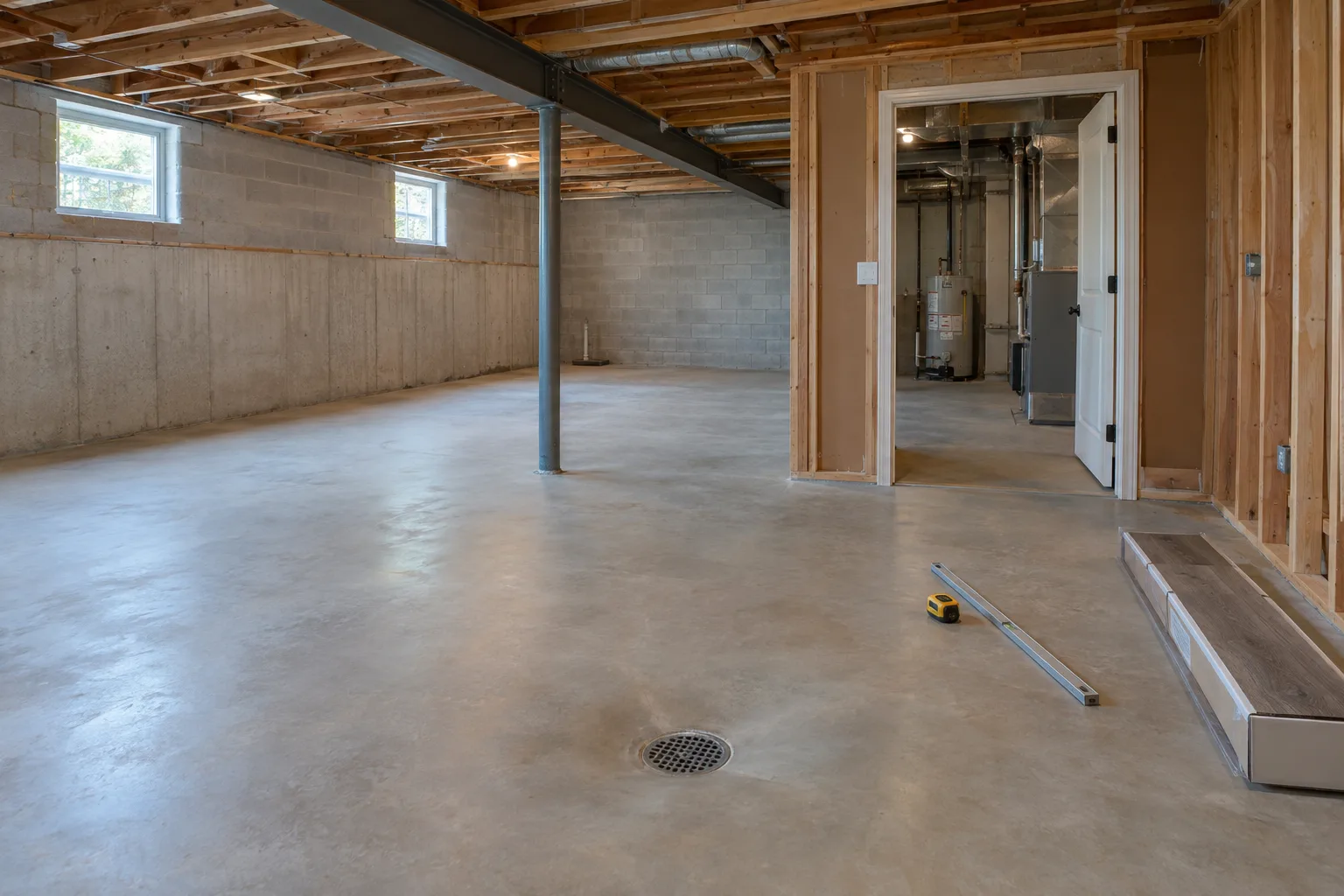
Basement or crawl-space dampness. Mention leaks, musty odors, visible dampness, or past water problems. Waterproof flooring does not resolve moisture underneath it.
Share these notes before buying materials. Ask what needs to be accessible for a visit and how any required moisture testing will be arranged. Do not assume a particular test is included in a measurement visit.
Will a thicker plank fix an uneven subfloor?
No. A thicker plank does not replace required subfloor preparation. A floor that looks level may still have high spots or low areas outside the chosen product’s flatness limits.
The COREtec WPC installation guide requires a clean, dry, flat, structurally sound base and gives product-specific flatness requirements. It also distinguishes waterproof flooring from moisture concerns below the floor.
Use the instructions for your exact product rather than applying one brand’s limits to every plank. Do not choose a thicker floor on the assumption that it will bridge dips or waves.
If the base needs preparation, address that in the installation plan before ordering. The product decision and the subfloor decision belong together.
Which installation requirements should you compare?
Check each candidate against the actual subfloor. Focus on these points:
- Allowable existing flooring: Confirm which surfaces may remain and which must be removed.
- Moisture requirements: Identify required testing, limits, and specified moisture-control materials.
- Underlayment: Use only what the product allows. Extra cushioning is not automatically better.
- Expansion space: Follow the selected floor’s instructions at walls and fixed objects.
- Transitions: Check doorway details, adjoining heights, and any required breaks between areas.
The COREtec SPC installation instructions explain that soft substrates can compromise locking performance and indentation resistance. Do not add padding simply to make a plank feel thicker or softer.
A product with attached backing may restrict additional underlayment. A different product may call for a specific layer beneath it. Follow the selected product’s guide rather than a rule meant for all LVP.
Prepare to discuss your flooring job with Mike
Have your product shortlist, room information, and notes about existing floors or damp areas ready. Mike has 31 years of floor installation experience, dating to 1995. He serves homes about 50 miles from the Taneytown office, including nearby Westminster, Gettysburg, and Hanover.
You can choose hardwood or vinyl plank at Baltimore Floor Works, 142 Railroad Ave., Westminster, or at Lowe’s or Home Depot. You can buy the flooring yourself, or Mike can usually order your selection through Baltimore Floor Works. Mike does not bring samples to your house.
Current rates are on the pricing page. The estimate tool shows a preliminary range that is not a contract. Product requirements and conditions at the house still need review.
Call or text (410) 259-7094 to discuss your plans. Leave a voicemail if nobody answers.
Questions people ask
Is a mil the same as a millimeter?
No. One mil is one-thousandth of an inch. Total flooring thickness is usually listed in millimeters, while traditional wear layers are commonly listed in mils.
Is thicker LVP always the better choice?
No. Compare construction, surface protection, approved uses, and installation requirements. The product must also fit your clearances and subfloor conditions.
Can extra underlayment improve a thinner plank?
Not necessarily. Added underlayment may be prohibited or may affect the locking system. Follow the exact product’s instructions.
Should you order flooring before discussing the product with Mike?
Discuss the selection first. Send the exact product name, specification sheet, and installation guide. Review relevant house conditions and ask how any required moisture testing will be arranged before ordering.
Sources
- Boyu Flooring: Vinyl Flooring Thickness & Wear Layer Guide
- Wills Flooring: Vinyl Plank Thickness & Wear Layers Explained
- Floor & Decor: What does wear layer mean?
- Mannington Commercial: The Specifiers Ultimate Guide to Luxury Vinyl Tile
- Mannington on Main: City Line Product Specifications
- COREtec: WPC Products with 5G Fold Installation Guidelines
- COREtec: Pro SPC Installation Guidelines