
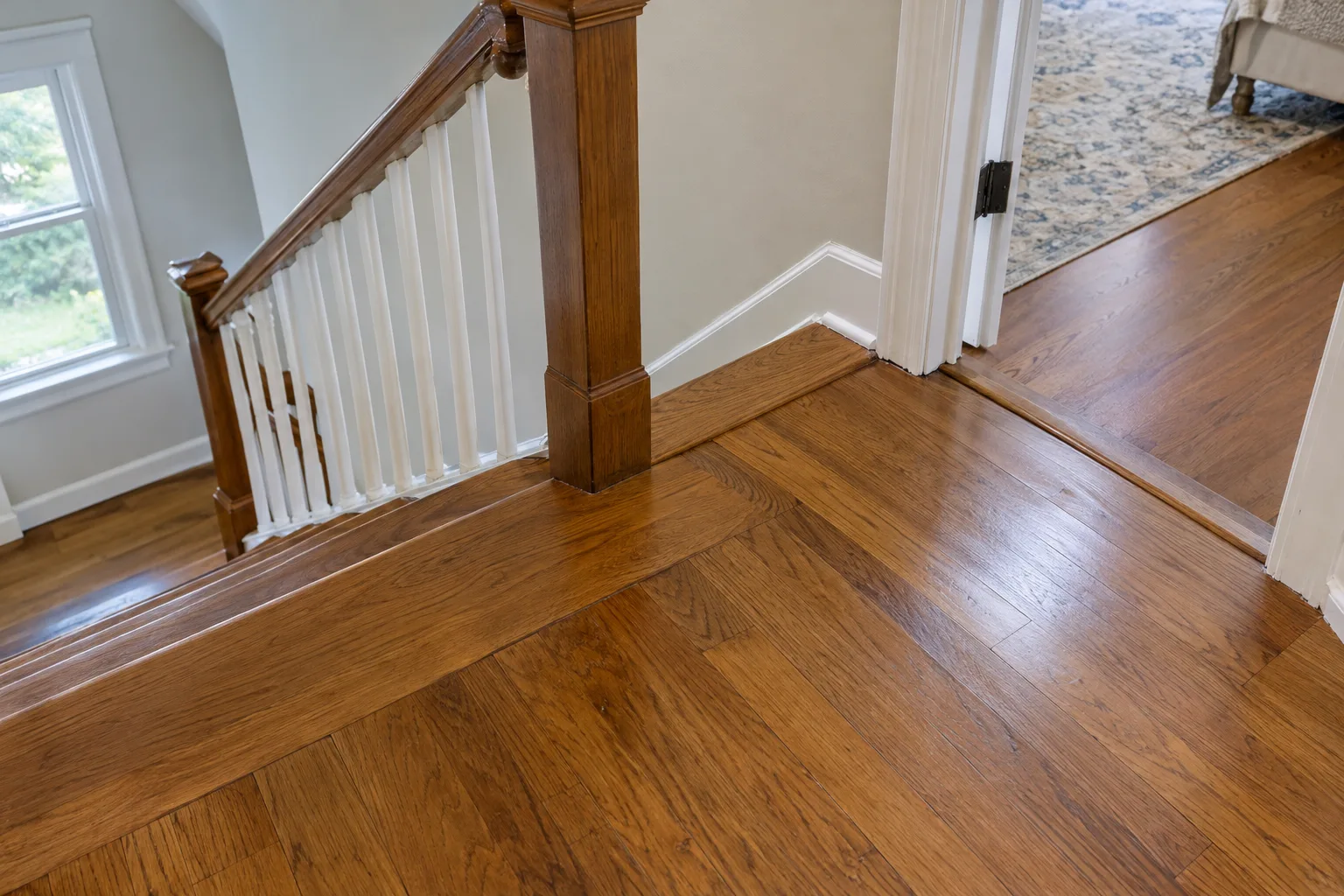
Key takeaways
- Decide which floors and stair parts will stay before choosing new hardwood.
- Choose the flooring and compatible stair nosing together. Similar color does not establish a usable connection.
- Ask Mike to assess finished landing height, stair dimensions, and doorway connections before you order.
- Confirm material availability, installation order, and upstairs access before scheduling the work.
- Plan delivery around indoor conditions and moisture checks, not a fixed waiting period.
Matching a stair landing to a new hardwood floor starts with compatible flooring and stair nosing, not just a similar color. Before you order, ask Mike to assess the landing height, stair connection, and adjoining doorways. Plan these parts together so the flooring you buy can meet the stairs correctly.
Decide what stays before choosing a color
Start with the scope of the work. Are you replacing only the landing, the landing and hallway, or stair components too? Each choice changes the material list and the connections that need attention.
Write down which surfaces will stay. Include the stairs, bedroom floors, closets, and any nearby bathroom floor. Then mark where the new hardwood should stop.
Use this planning list:
| Area | Decision before ordering |
|---|---|
| Landing | Replace the surface only, or include connected flooring? |
| Hallway | Continue the same product, or stop at a planned transition? |
| Stair treads | Keep the existing treads, or discuss replacement? |
| Doorways | Identify each adjoining floor and its height. |
| Stair edge | Confirm a compatible, ready-to-install nosing. |
Discuss stair and landing connections with Mike before committing to materials. A landing is not separate from the stairs just because you are leaving the treads in place.
Keep your choices focused on ready-to-install materials. Mike does not sand, refinish, stain, or finish an unfinished floor.
Treat color as one part of the decision
A close color match can still leave you with an unsuitable stair edge. Flooring thickness, attachment method, and nosing shape all matter.
Stair nosing is the piece that finishes the exposed edge of the landing above the steps. It must work with the selected flooring system. A product with a similar wood tone is not automatically compatible.
Bring the exact flooring product name and number into the discussion. A description such as “brown oak” leaves too much unknown. Product details help identify the thickness, installation method, and available accessories.
For appearance, compare the new material with the stairs and adjoining floors in your home's lighting. Look at grain, plank width, sheen, and undertone. An intentional contrast may work better than a near match that looks slightly wrong. First, though, confirm that the materials can form a usable connection.
Check the stair edge before ordering boards
Ask Mike to check the selected floor's thickness and installation method against the proposed nosing. Do not assume every hardwood floor uses the same edge detail.
For example, Seneca's hardwood transition installation guide distinguishes flush nosing for nailed or glued floors from overlap nosing for floating floors. It also calls for checking the nosing size against flooring thickness. Its floating-floor detail allows movement beneath the nosing rather than fastening the molding directly to the boards.
Those are instructions for that manufacturer's systems, not a universal rule for every hardwood product. Your selected floor and nosing need their own compatibility check.
If you cannot find suitable ready-to-install nosing, pause the order. Ask Mike whether another compatible accessory or another flooring selection would work. Do not buy the boards assuming the stair edge can be solved later.
Plan a measured visit around the whole connection
Use the visit to discuss the whole connection, not just the landing's square footage. The following is a proposed pre-order checklist, not a description of a fixed inspection package:
- The existing landing surface and what lies beneath it.
- The proposed finished-floor height.
- The selected flooring thickness and installation method.
- The nosing profile and how it will attach.
- The existing stair dimensions and the effect of the new landing height.
- Adjoining floor heights and doorway transitions.
- Door clearance where the new flooring will pass beneath a door.
Leaving the existing treads in place does not remove the need to assess the stairs. A change at the landing can affect the connection to the next step.
Shaw's stair installation guidance directs installers to check applicable requirements before changing an existing step profile and to follow tread and riser requirements. Ask Mike to assess the proposed connection before you place the material order. Do not rely on a general online stair measurement as the requirement for your home.
Settle the installation sequence before buying
The stair edge cannot always be added after the hallway flooring is down. Some systems require the nosing to establish the starting connection.
For its stair-nosing systems, Seneca directs installers to install the top-step nosing before the flooring. Ask Mike which sequence applies to your selected products rather than treating that instruction as universal.
Also ask whether the nosing and doorway transitions will be available when needed. Having the floorboards on hand does not mean the full material package is ready.
Discuss access at the same time. If the landing is your only route upstairs, tell Mike before work is scheduled. Mention bedrooms, bathrooms, children, pets, and anyone who needs assistance on stairs. Ask when the route may be unavailable and what arrangements you should make.
Include the landing in moisture planning
A landing needs the same moisture planning as the connected hardwood floor. Do not treat a small area as an exception.
For your Taneytown-area home, tell Mike about leaks, damp areas, unusual indoor humidity, or heating and cooling that will be turned off. Ask what normal indoor conditions need to be established before delivery.
The NWFA installation guidelines call for checking jobsite conditions and subfloor moisture before delivery, followed by applicable flooring and room-condition checks. An outdoor humidity reading does not replace those checks.
Do not assume a fixed number of days makes the wood ready. Follow the selected product's instructions and the conditions needed for the job. Confirm where the materials should be stored before arranging delivery.
Leave with a coordinated shopping list
Before authorizing a purchase, identify the exact flooring product, compatible nosing, doorway transitions, and included areas. Confirm who will order each item. Ask Mike to check the product details before you commit.
You choose hardwood or vinyl plank at Baltimore Floor Works, 142 Railroad Ave., Westminster, or at Lowe's or Home Depot. You can buy the flooring yourself, or Mike can order the floor you picked, usually through Baltimore Floor Works. Mike does not bring samples to your house.
Before a visit, ask whether you should send landing photos, views of the stairs, doorway photos, and the flooring product number. Include which surfaces you want to keep. Photos can help explain the scope, but they do not replace measurements.
Mike has installed floors for 31 years, starting in 1995. He serves homes within about 50 miles of the Taneytown office, including Westminster, Frederick, Gettysburg, and Hanover. Confirm your location when you contact him about the landing.
Before ordering, plan your stair and landing connection. Call or text Mike at (410) 259-7094. If nobody answers, leave a voicemail. Current rates are on the pricing page. The estimate tool shows a preliminary range that is not a contract.
Questions people ask
What needs checking if the landing flooring changes but the existing stair treads stay?
Ask Mike to assess the proposed finished landing height, nosing fit, stair dimensions, and adjoining doorway heights. Keeping the existing treads does not remove the need to check the stair connection.
Should Mike check the flooring and nosing before you order?
Yes. Ask Mike to assess the exact flooring and nosing product details before you authorize the purchase. Thickness, installation method, and accessory compatibility matter as well as color.
What if the selected floor has no suitable ready-to-install stair nosing?
Pause the order and discuss another compatible accessory or a different flooring selection with Mike. Do not assume the edge can be solved after installation. Mike does not sand, refinish, stain, or finish an unfinished floor.
What should you send before a pre-order visit?
Ask whether Mike would like landing photos, stair-edge views, adjoining doorway photos, and the flooring product name and number. Identify which floors and stair parts will stay. Photos do not replace measurements.
What should you discuss if the landing is your only route upstairs?
Tell Mike before scheduling that the landing is the only upstairs route. Mention bedrooms, bathrooms, pets, and anyone who needs stair assistance. Ask when access may be interrupted and what arrangements you should make.
Sources
- Search-result comparison: Copeland Hardwood Floors, Matching New Hardwood to an Existing Floor
- Search-result comparison: FloorFreight, How to Match New Hardwood to an Existing Floor
- Search-result comparison: Monteros, Matching New Hardwood to Existing Floors
- Manufacturer technical source: Seneca Millwork, Hardwood Transitions Installation Guide
- Manufacturer technical source: Shaw, Hardwood Laminate Installation on Step Downs or Staircases
- Industry technical source: National Wood Flooring Association, Wood Flooring Installation Guidelines