Key takeaways
- Engineered hardwood is more dimensionally stable, but it does not solve crawl-space moisture problems.
- An unheated crawl space does not automatically rule out solid hardwood or make engineered hardwood suitable.
- Compare indoor conditions, flooring moisture, subfloor moisture, and construction with the exact product instructions.
- Ground moisture control and flooring underlayment serve different purposes.
- Resolve water entry, unsuitable moisture conditions, and structural concerns before installing hardwood.
Choosing solid or engineered hardwood over a crawl space starts with moisture conditions, not just the board type. Engineered hardwood generally moves less as moisture changes, but neither option fixes a damp crawl space. An unheated crawl space alone does not decide which floor will work.
Before buying boards for your Taneytown-area home, check the space below, the wood subfloor, and your indoor conditions. Then compare those findings with the installation instructions for the exact flooring product.
Check the crawl space before choosing wood
Moisture can reach the floor from several directions. Bare soil can release water vapor. Plumbing can leak. Poor drainage can bring water beneath the house. Humid outdoor air can also add moisture.
Standing water is not the only warning sign. Musty odors, damp insulation, visible fungal growth, or damaged wood deserve attention too. A crawl space that looks dry during one visit may still have seasonal problems.
The Building America crawl-space assessment guidance identifies moisture, drainage, and structural conditions that should be checked before work proceeds.
Do not enter an unsafe or inaccessible crawl space. If access is tight, wiring is exposed, or wood appears damaged, arrange an appropriate assessment rather than crawling in yourself.
For hardwood floor installation, the useful question is not simply whether engineered wood is better. It is whether your home can meet the selected floor's installation requirements.
Compare solid and engineered without assuming a winner
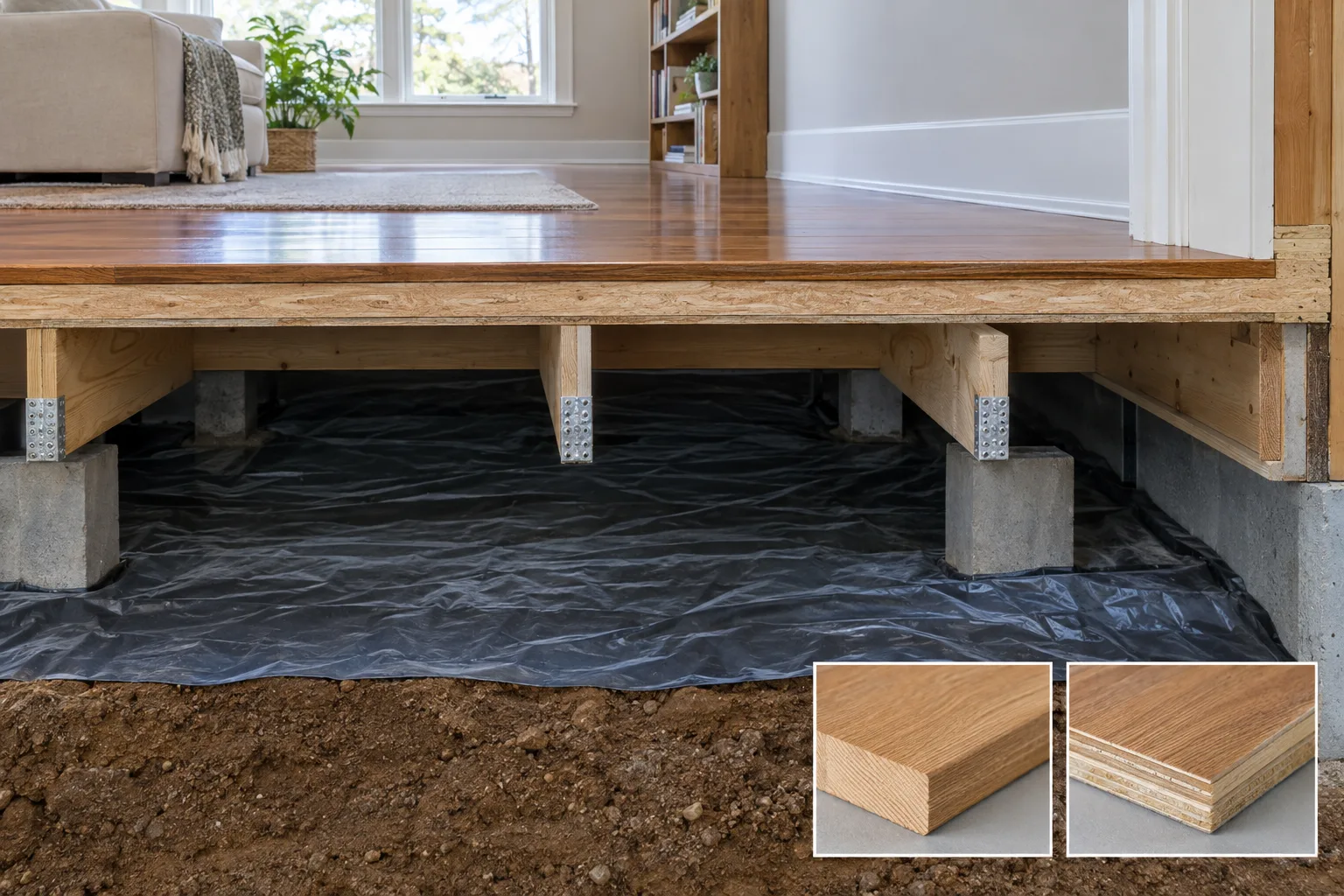
Solid hardwood is wood through the thickness of each board. Engineered hardwood has a wood surface over supporting layers. That layered construction generally reduces movement as moisture conditions change.
Both still contain wood. Both need a suitable installation site.
| Decision point | Solid hardwood | Engineered hardwood |
|---|---|---|
| Moisture-related movement | Generally moves more | Generally moves less |
| Ongoing crawl-space dampness | Must be corrected | Must be corrected |
| Installation method | Follow the exact product guide | Follow the exact product guide |
| Wood subfloor condition | Must meet product requirements | Must meet product requirements |
| Automatic choice above an unheated crawl space | No | No |
Solid hardwood may remain an option when the product's site and subfloor requirements can be met. Engineered hardwood may offer more dimensional stability, but that is not permission to install over wet or damaged materials.
The National Wood Flooring Association's problem-prevention guidance explains how moisture changes can contribute to cupping, gaps, and splits. Choosing a more stable construction reduces one concern. It does not remove the need for moisture control.
What should a measured installation assessment include?
Ask for an assessment tied to the flooring you plan to buy. A general statement that the crawl space seems dry is not enough to establish readiness.
The assessment should cover:
- Indoor temperature and relative humidity. Check whether normal living conditions can be maintained.
- Subfloor moisture. Measure the wood that will support the new floor.
- Flooring moisture. Check the boards as required by the selected product.
- Subfloor construction. Identify its material, thickness, support, and condition.
- Flatness. Compare the surface with the flooring manufacturer's requirements.
- Installation method. Confirm whether the product permits the proposed fastening, adhesive, or floating system.
- Written results. Compare the findings with the current installation guide.
An air-humidity reading and a wood-moisture reading measure different things. Comfortable room air does not prove that the subfloor below is ready. A humidity meter in your living room cannot replace measurements of the flooring and subfloor.
Avoid using one universal pass number for every floor. Requirements vary by product and installation method. The Bruce engineered hardwood installation guide shows why site conditions and product-specific instructions matter.
Discuss these checks with Mike before installation. Confirm which measurements he performs and whether your crawl-space conditions call for a separate assessment.
Ground covering and flooring underlayment are not the same
These materials sit in different places and address different parts of the floor assembly.
A ground vapor retarder covers soil beneath the house to limit moisture vapor coming from the ground. Its condition, coverage, and detailing belong in the crawl-space assessment.
Underlayment or another specified layer sits directly beneath the flooring. Its purpose depends on the flooring system and installation method. It must follow the product instructions.
Do not assume that a roll of material beneath your hardwood will fix uncovered soil, a plumbing leak, or water entering through the foundation. Do not add an extra layer without checking compatibility, either. The full floor assembly matters.
Know when to pause the flooring job
Pause when there is active water entry, unsuitable moisture, damaged subflooring, or a structural concern. Address the cause before covering the area with new flooring.
Opening vents is not a universal fix. Sealing a crawl space is not a stand-alone instruction either. Outdoor humidity, drainage, insulation, and the home's systems need to be considered together.
Crawl-space moisture correction and structural repairs are separate from the flooring services described here. Ask Mike what must be resolved before flooring work can proceed and whether another professional needs to assess the conditions.
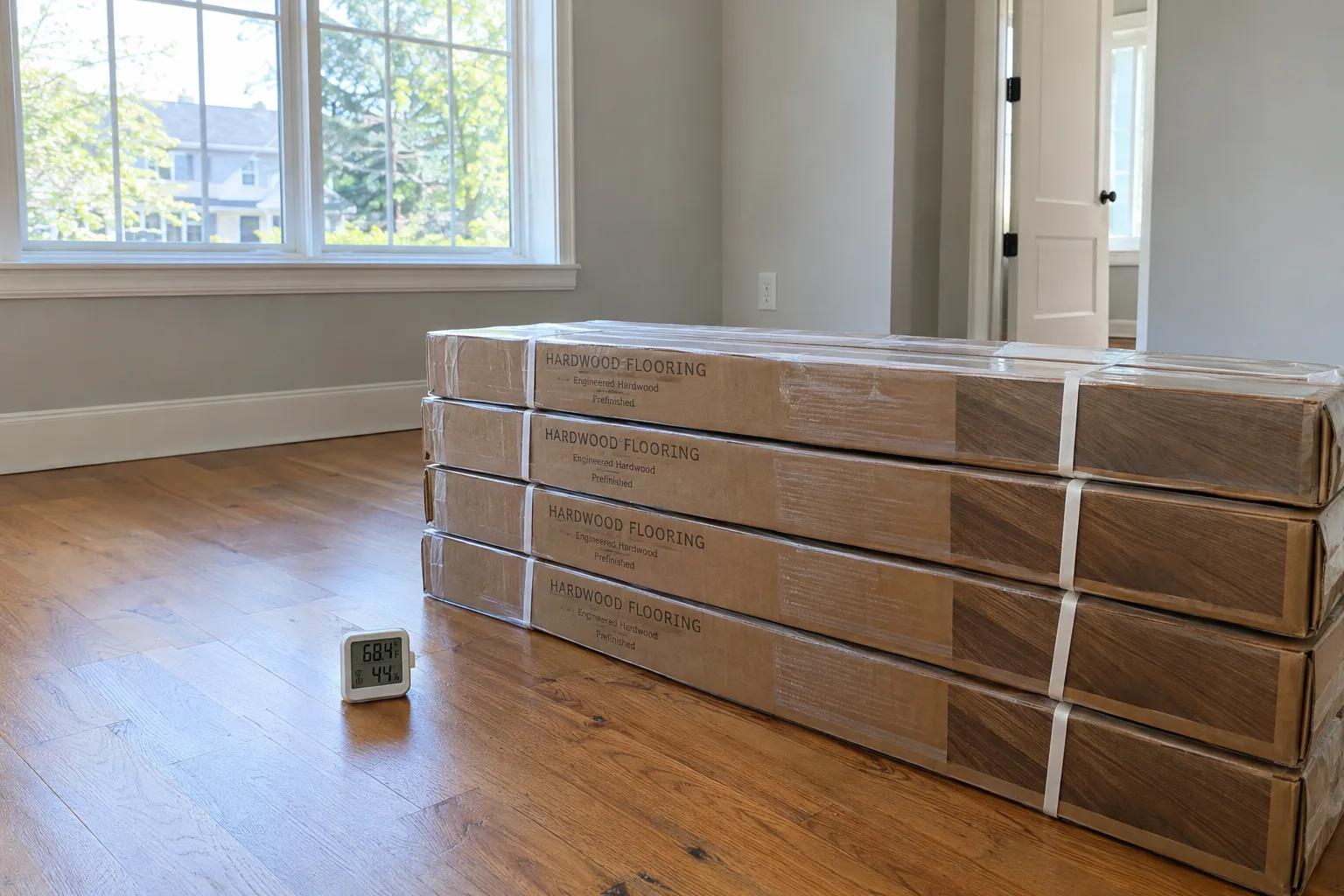
Also avoid treating acclimation as a fixed countdown. Leaving boxes in a room for several days does not prove readiness. Follow the selected product's storage and acclimation instructions, along with its required site conditions.
Prepare for a flooring discussion near Taneytown
You can gather useful information without entering the crawl space.
- Locate the access opening and note whether it is blocked.
- Gather records of drainage, plumbing, insulation, or moisture-control work.
- Note rooms where existing boards develop seasonal gaps or cupping.
- Write down when odors or dampness appear, especially after rain.
- Save the flooring product name, model, and installation guide.
- Ask about site readiness before placing the material order.
Photos taken safely from an access opening may help explain a concern. They do not replace measurements or an assessment when one is needed.
Mike has installed floors since 1995, with 31 years of installation experience. He serves homes about 50 miles from the Taneytown office, including nearby Westminster, Gettysburg, and Hanover. Mention your town and any crawl-space concerns when discussing the job.
Common questions before you buy
Does an unheated crawl space rule out solid hardwood?
Not by itself. The decision depends on moisture conditions, subfloor construction, the indoor environment, and the exact product's requirements. Engineered hardwood is more stable, but it still needs a suitable site.
Can a dry-looking crawl space still cause problems?
Yes. A visual check does not measure moisture in the wood or reveal every seasonal condition. Previous leaks, damp weather, and moisture from soil can matter even when no standing water is visible.
Should you order boards before the moisture assessment?
It is better to establish site readiness first. You can narrow your choices and collect product instructions before buying. That lets you check whether the proposed floor and installation method suit your home.
Choose materials and plan the next step
You can select hardwood at Baltimore Floor Works, 142 Railroad Ave., Westminster, or at Lowe's or Home Depot. You can buy the material yourself, or Mike can order the floor you selected, usually through Baltimore Floor Works. Mike does not bring samples to your house.
Keep the exact product information with your selection. A color name alone is not enough to check installation requirements.
Current rates are on the pricing page. The estimate tool shows a preliminary range that is not a contract. Discuss unresolved moisture or subfloor issues before scheduling installation.
Call or text Mike at (410) 259-7094. If nobody picks up, leave a voicemail. Include your town, the rooms involved, and any known crawl-space concerns.
Questions people ask
Does an unheated crawl space rule out solid hardwood?
Not by itself. The choice depends on moisture conditions, subfloor construction, the indoor environment, and the exact flooring product's requirements. Engineered hardwood generally moves less, but neither type replaces moisture control.
Can a dry-looking crawl space still cause flooring problems?
Yes. A visual check does not measure moisture in the wood or reveal every seasonal condition. Ground moisture, previous leaks, and humid outdoor air can matter even when no standing water is visible.
Is crawl-space ground covering the same as flooring underlayment?
No. A ground vapor retarder limits moisture vapor from the soil. Flooring underlayment sits beneath the boards and serves purposes defined by the flooring system. Neither should be treated as a substitute for correcting leaks or water entry.
Should you buy hardwood before checking crawl-space conditions?
Establish site readiness before placing the material order. First narrow your choices and gather the exact product instructions. Then discuss the required checks with Mike and confirm whether a separate crawl-space assessment is needed.
Sources
- NWFA: Problem Prevention
- Bruce: Engineered Hardwood Installation Instructions
- Bruce: 3/4-Inch Solid Wood Flooring Installation Instructions
- Building America Solution Center: Pre-Retrofit Assessment of Crawlspaces and Basements
- Lowe's: Choose the Best Hardwood Flooring for Your Home
- Perfectum: Solid vs Engineered Hardwood for Slab and Crawlspace Homes
- W&S: Before You Install Hardwood: The Subfloor Decides