Key takeaways
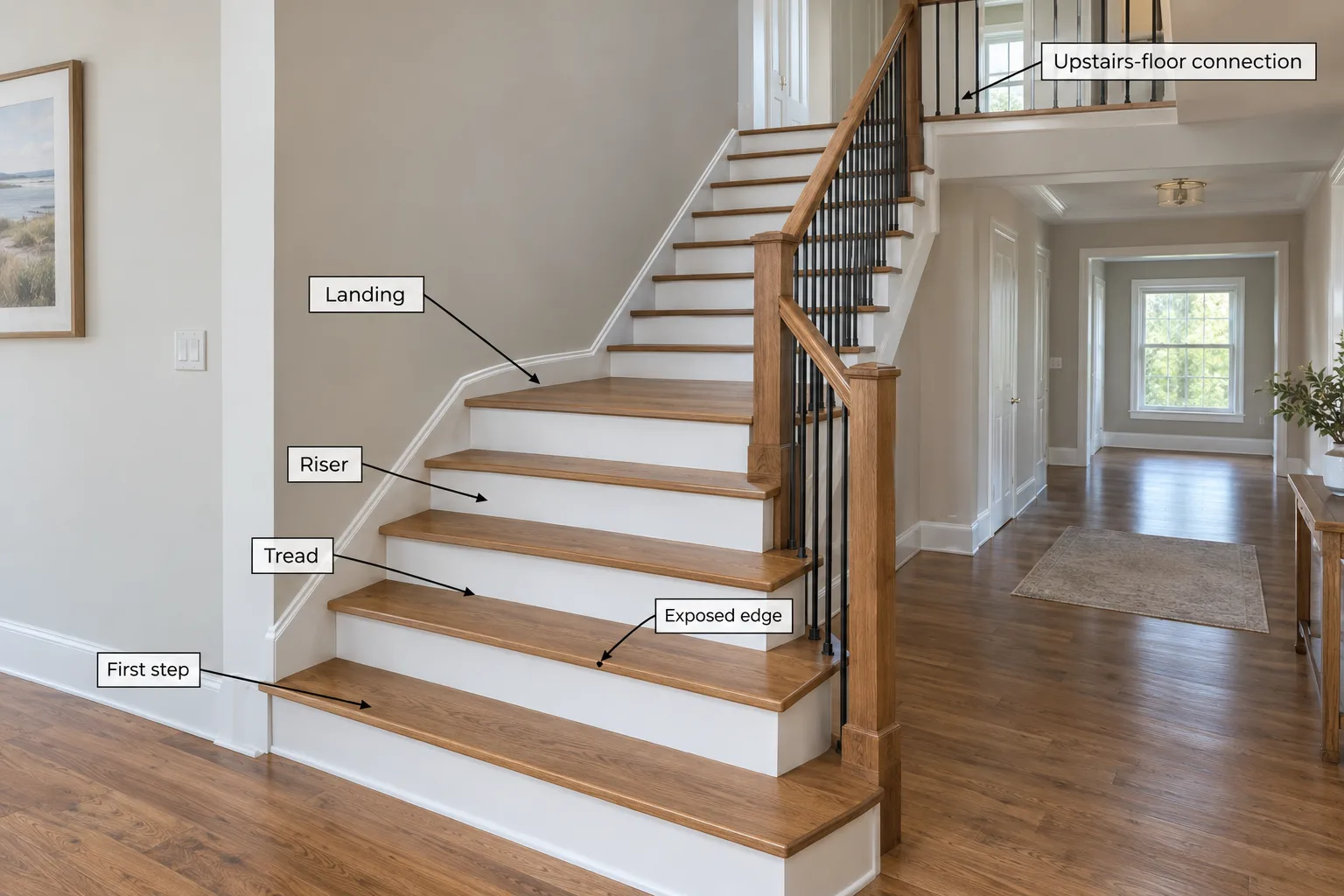
- Set the scope before choosing a tread color. Include landings, risers, exposed sides, and the upstairs-floor connection.
- Request a written parts list based on measurements of your actual staircase.
- Compare factory-finished stair parts with the flooring they will meet. A similar color name does not establish an exact match.
- Confirm carpet removal, disposal, household preparation, and stair access before work begins.
- Follow the selected product's storage and indoor-condition requirements rather than a general acclimation timetable.
Before you choose a tread color, decide where the work starts and stops. To replace stair carpet with wood, include every landing, each riser, exposed sides, and the connection to your upstairs floor. Those decisions shape the measurements, materials, and access plan.
For your home near Taneytown, start with a whole-staircase checklist. Use it when discussing wood stair installation with Mike, before buying parts. Mike serves homes within about 50 miles of his Taneytown office.
What stays, and what changes?
Walk from the downstairs floor to the upstairs hallway. Mark each surface as staying, changing, or undecided. Do not treat the staircase as only a count of horizontal steps.
A tread is the surface you step on. A riser is the vertical face between treads. A landing is the larger platform at a turn or at the end of a flight.
Use this scope checklist during your measurement visit:
- Downstairs connection: Where does the existing floor meet the first step?
- Each flight: Which treads, risers, and exposed sides will change?
- Every landing: Will its flooring and perimeter edges change?
- Top connection: How will the finished stair meet the upstairs floor?
- Upstairs hallway: Will its flooring stay or be replaced?
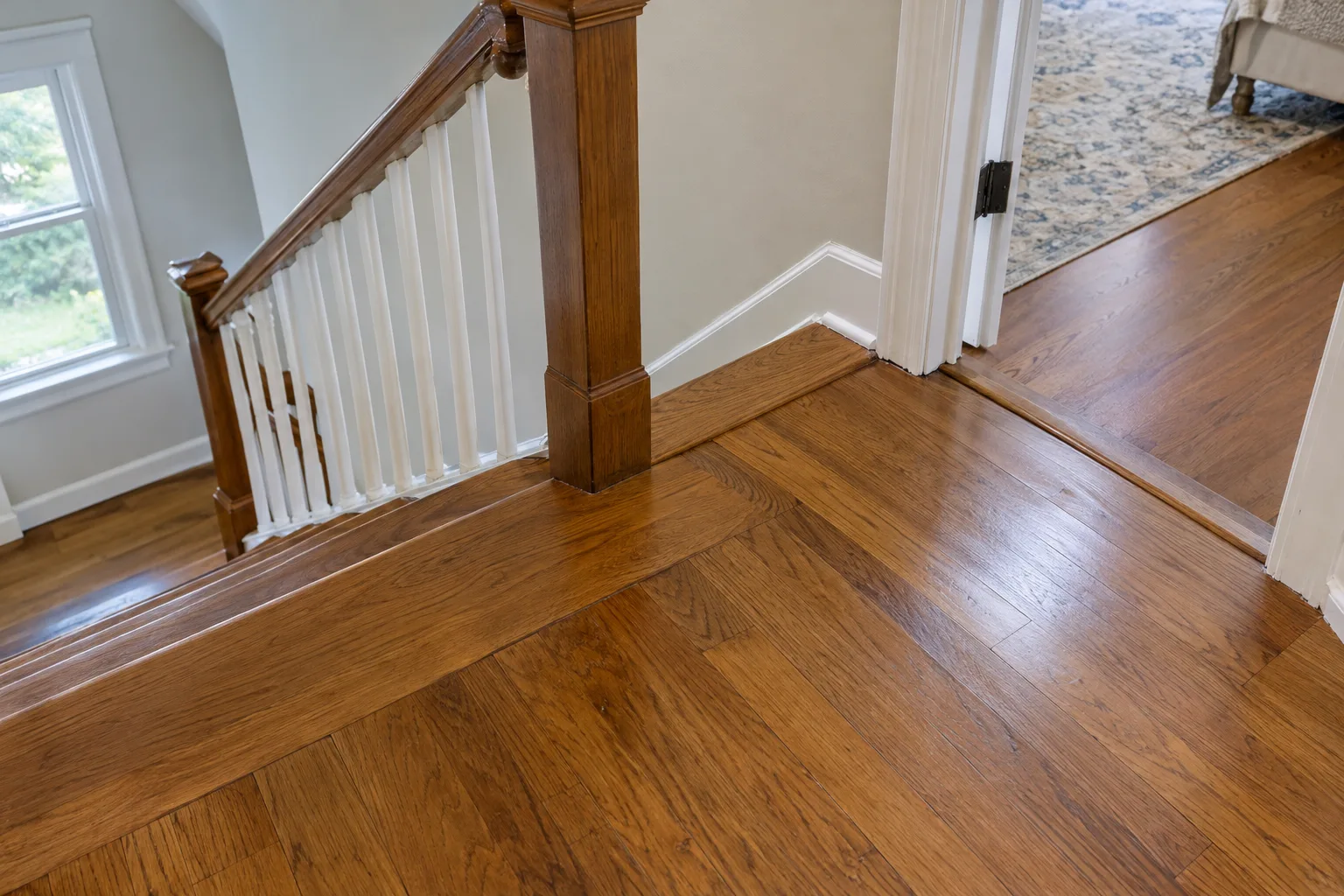
Also identify railing posts, trim, and any carpet that continues into nearby rooms. Ask whether those items stay untouched or need attention as part of the job. A clear boundary helps prevent missing materials and unfinished-looking connections.
What happens at the landing and upstairs hallway?
Make the landing and upstairs hallway separate decisions. Replacing stair carpet does not automatically mean replacing either one.
| Area | Decision before ordering |
|---|---|
| Intermediate landing | Keep its current floor or include new flooring? |
| Upstairs hallway | Keep carpet, keep existing hard flooring, or replace it? |
| Top stair connection | Which finished edge or transition suits the two surfaces? |
| Downstairs connection | How will the first finished step meet the existing floor? |
Tell Mike if you expect to replace the hallway floor later. A connection planned around today's carpet may need a different approach when that carpet changes.
Ask how the proposed stair materials affect the finished heights at the first and last steps. Adding material changes more than appearance. The measurement discussion should address step consistency and applicable stair requirements before selecting an installation approach.
What will the risers and exposed edges look like?
Decide whether you want the risers to coordinate with the treads or provide a contrasting factory-finished appearance. Then confirm which suitable parts are available for your staircase.
Look at the stairs from below, above, and beside the railing. An open side can reveal tread ends and edges that are hidden on a staircase enclosed by walls.
Take these photos before the visit:
- The full staircase from the bottom.
- The full staircase from the top.
- Each open side and its railing posts.
- Close-ups of landings and existing edge trim.
- The upstairs flooring where it meets the stairs.
Have Mike and the selected supplier confirm the correct exposed-edge treatment before ordering. Do not assume a standard tread has the finished end your staircase needs.
Mike does not sand, refinish, stain, or finish unfinished floors. Plan around suitable factory-finished materials, not unfinished parts that need color work in your house. Confirm the exact tread, riser, and edge products with Mike before buying them.
How closely should the stairs match your flooring?
Choose between coordination and an exact product match. Those are different goals. Similar color names do not establish that stair parts and flooring will look identical.
Compare the actual selected parts with your upstairs floor before installation. Look at species, grain, sheen, and color in your home's light. A broad stair tread may look different from narrow hallway boards even when the colors are close. Mike does not sand or stain parts to make them match.
You can select hardwood or vinyl plank at Baltimore Floor Works, 142 Railroad Ave. in Westminster, or at Lowe's or Home Depot. For a stair project, confirm compatible stair parts before purchasing flooring. A flooring selection alone does not settle which tread or edge pieces you need.
You can buy the selected material yourself, or Mike can order it, usually through Baltimore Floor Works. Mike does not bring samples to your house.
What needs measuring before you order?
Request a written parts list based on the actual staircase. A step count alone does not account for different widths, turns, exposed ends, or landing connections.
Use this checklist to guide the measurement discussion:
- First step: Document its height, width, shape, and connection to the downstairs floor.
- Each tread and riser: Record the dimensions and any differences that affect fit.
- Last step: Check the finished height and relationship to the upper floor.
- Every landing: Record dimensions, perimeter, openings, and flooring direction.
- Upstairs connection: Identify the existing flooring, edge detail, and proposed transition.
- Exposed sides: Mark which ends need a finished treatment.
- Supporting surfaces: Check for movement, loose parts, uneven surfaces, and previous alterations.
These are inspection points, not assumptions about homes in Taneytown. Some supporting surfaces may remain hidden until carpet is removed. Ask what can be established at the visit and what must be checked later.
Nydree's tread and riser instructions call for fitting parts to the staircase and checking the supporting surfaces. They illustrate why a step count is not enough. This reference does not mean Mike installs that manufacturer's products. Exact installation requirements depend on the selected product and staircase.
Before placing an order, confirm that the parts list includes landings, risers, exposed-edge pieces, and transitions, not just treads. Ask who will order each item and check the delivery against that list.
How should you prepare the house?
First, confirm who removes the carpet, padding, tack strips, and staples. Also confirm who handles disposal. Do not assume either task is included unless it appears in the agreed scope.
Ask what you should clear before Mike arrives. Keep the stairs and nearby work areas free of shoes, furniture, and loose belongings. Arrange a separate area for pets and children. Discuss a clear route for carrying materials into the house.
Choose a material storage location before delivery. Ask how the selected products must be stacked, protected, and conditioned. Follow their instructions rather than using a fixed number of acclimation days.
The National Wood Flooring Association's prevention guidance explains that wood responds to moisture changes. Discuss how you will maintain the required indoor conditions before, during, and after installation. A damp storage area or a space without suitable climate control may not meet the product's requirements.
When can you use the stairs again?
Tell Mike early if the staircase is your only route to upstairs bedrooms or a bathroom. Access is a planning issue, not something to settle after work starts.
Ask when the stairs will be unavailable and whether there will be any usable access between work stages. Discuss children, pets, mobility needs, and anything you must move upstairs beforehand. If you need another sleeping arrangement, settle that before the work date.
Do not assume a universal walk-on time. Adhesive curing, the selected stair system, and site conditions can affect access. Confirm when the stairs can be used and whether any temporary restrictions remain.
What should you confirm before scheduling?
Keep your photos, scope checklist, and written parts list together. Before scheduling, make sure you can answer these questions:
- Which surfaces stay, and which change?
- Are every landing and both floor connections included?
- Have the factory-finished parts and exposed edges been confirmed?
- Who buys, receives, and stores the materials?
- Who handles carpet removal and disposal?
- What remains to be checked after carpet removal?
- When will you lose access to the stairs, and when can you use them again?
Current rates are on the pricing page. The preliminary range on the estimate page is not a contract. Your scope needs to account for the actual stairs, landings, materials, and preparation.
To discuss your stair replacement scope, call or text Mike at (410) 259-7094. Leave a voicemail if nobody answers.
Questions people ask
What should you decide before replacing stair carpet with wood?
Decide where the work starts and stops before choosing a tread color. Include every landing, each riser, exposed sides, and the connection to your upstairs floor. Identify which nearby flooring and trim will stay.
Is a step count enough to order stair materials?
No. Request a written parts list based on your actual staircase. Measurements need to account for tread and riser dimensions, landings, exposed ends, finished heights, and floor connections. Some supporting surfaces may need another check after carpet removal.
Can Mike stain new stair parts to match the upstairs floor?
No. Mike does not sand, refinish, stain, or finish unfinished floors. Select suitable factory-finished parts and compare them with your existing flooring. Confirm the exact products with Mike before ordering.
Does Mike handle carpet removal and disposal?
Confirm both tasks before scheduling. Have them included in the written scope if agreed. Also ask what you should clear and where materials should be stored.
Can you use the stairs during installation?
Do not assume access will be available. Tell Mike if these are your only stairs. Discuss restricted-access periods, whether access is possible between stages, and when the selected installation can be walked on.