Key takeaways
- Dogs can scratch vinyl plank. Scratch resistance does not mean a floor will stay unmarked.
- Compare the exact product's wear layer, surface treatment, installation instructions, and care guide.
- Plan for nail care, paw traction, tracked-in grit, furniture feet, and rolling chairs.
- Discuss doorways, adjoining floors, existing floor layers, and known dampness before ordering.
- Confirm material quantity, spare planks, pet separation, and return-to-use timing before installation.
Yes. Dogs can scratch vinyl plank. Scratch-resistant does not mean scratch-proof. Shaw's scratch and scuff guidance warns that luxury vinyl can scratch. Nails, tracked-in grit, and everyday furniture use can all leave marks.
You do not need to rule out vinyl plank because you have a dog. You do need to compare the exact product and plan for how your household uses the floor. Start with this before-you-buy checklist.
1. Get the exact product name and documents
Write down the product name, collection, color, and product number. Two wood-look planks can look similar but have different surface treatments and installation requirements.
Get these documents before ordering:
- The product specification sheet.
- Information about the wear layer and surface treatment.
- The installation instructions.
- The care and cleaning guide.
Keep them together so you can compare products on the same terms. A broad label such as “pet-friendly” does not explain how to care for the surface or prepare the floor beneath it.
Share the exact selection when discussing Mike's vinyl plank and tile installation service. Product instructions matter before materials arrive, not just when installation begins.
2. Compare more than plank thickness
Overall plank thickness and wear-layer thickness describe different parts of a floor. Neither number alone tells you how well the surface will resist your dog's nails.
The wear layer is part of the protective construction. The topcoat also matters. Shaw's explanation of topcoats and wear layers describes the role that surface treatment plays in performance.
Use this comparison when narrowing your choices:
| What to compare | What to look for |
|---|---|
| Listed wear layer | The specification for that exact product |
| Surface treatment | The manufacturer's description of surface protection |
| Texture | How the surface may feel under paws |
| Care guide | Approved cleaners, mats, and furniture protection |
| Installation instructions | Requirements for the floor beneath the planks |
There is no universal minimum wear layer that suits every dog household. Do not let one number replace a comparison of the complete product.
3. Consider your dog's nails and activity
Watch where your dog runs, turns, and stops. Repeated sharp turns at a kitchen doorway put different demands on the surface than a slow walk across a bedroom.
Karndean's family-friendly flooring guidance recommends keeping pet nails at a reasonable length to help prevent deep scratches. Nail care remains necessary even with a scratch-resistant floor. Ask your veterinarian or groomer for guidance if you are unsure.
Karndean also suggests considering textured products for additional paw traction. That does not make every vinyl plank non-slip. A printed wood pattern does not tell you how much grip the surface provides.
Think about where your dog stands up, approaches its bowl, or changes direction. An older dog may need extra help with footing. Check any planned mat against the flooring's care guide before using it.
4. Trace the route from the outside door
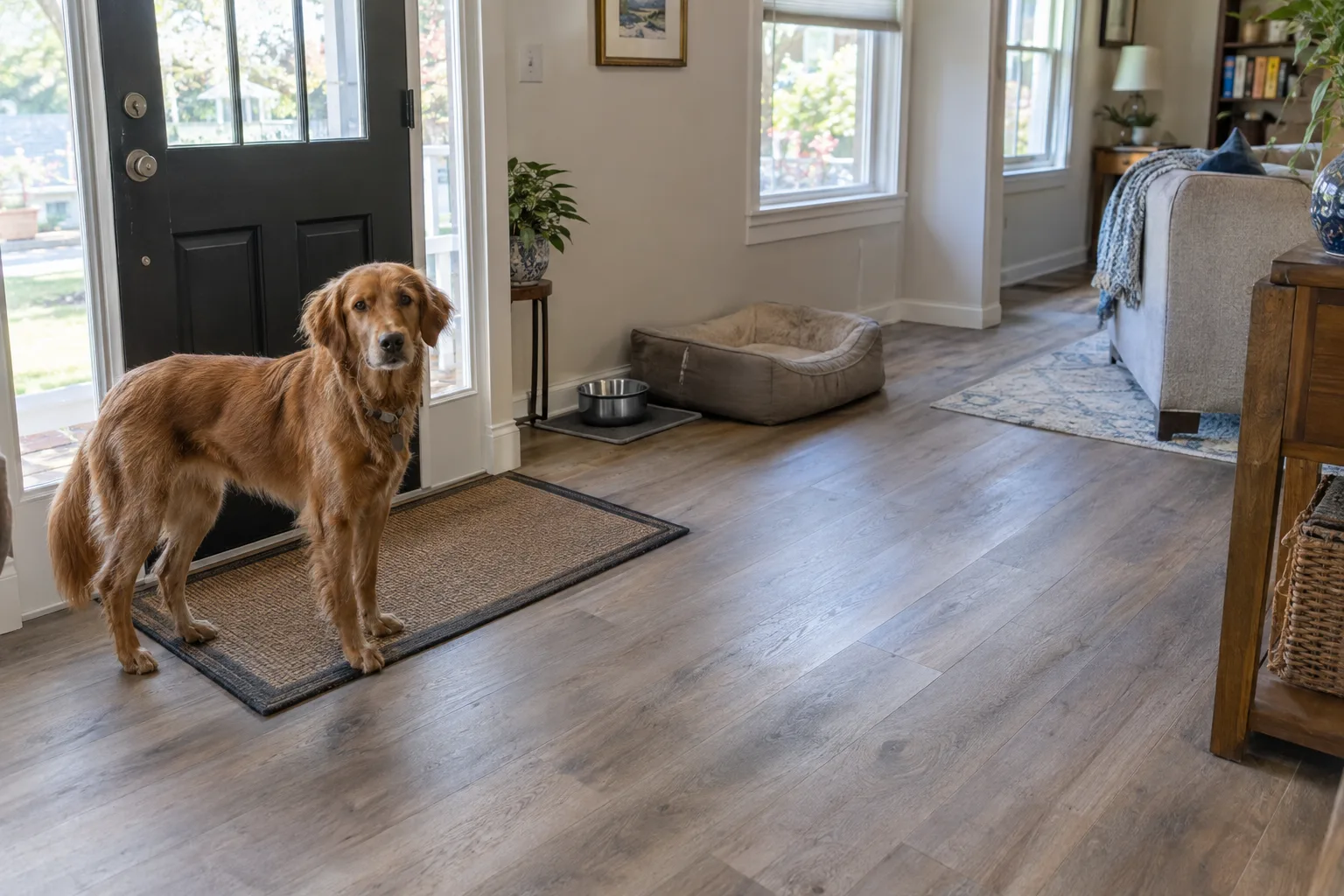
Follow your dog's usual route from the outside door to its bed and water bowl. Include the back or side door if that is where your dog comes in from the yard.
Karndean's care guidance notes that loose dirt and grit can cause fine scratches. For a Taneytown household, that makes the route from the yard or driveway worth planning before installation.
Choose entry mats with backing approved for the selected floor. Shaw cautions against rubber- or latex-backed mats because they may discolor vinyl. Do not assume a mat is suitable just because it is sold for indoor use.
Remove grit regularly using the methods allowed by the care guide. Check beneath mats as well as around them. Clean spills promptly, including splashes around the water bowl. Use the product's approved cleaner rather than assuming a homemade mixture is safe.
5. Include chairs and furniture in the plan
Your dog may not be the only source of marks. Dining chairs, desk chairs, and furniture feet need attention too.
Shaw recommends suitable felt furniture protection and chair pads beneath rolling chairs. Before the new floor goes down:
- Check furniture feet for rough or exposed edges.
- Fit appropriate felt protection where recommended.
- Plan a suitable protective mat beneath rolling chairs.
- Keep pads clean and replace worn ones.
- Arrange help to lift furniture instead of dragging it.
A pet-friendly label does not replace these precautions. It is easier to plan protection now than to discover a problem after moving everything back.
Before you buy for your Taneytown home
Show Mike your dog's busiest route, the outside doorways, and the adjoining floors. Point out known damp areas or past leaks before ordering materials.
In an older house, ask what existing floor layers are present and what is known about the subfloor. Age alone does not mean there is a defect. Treat those as questions to investigate, not reasons to assume the floor needs major work.
Have these questions ready:
- What existing flooring will stay, and what may need removal?
- Is there movement, damage, or an uneven area to investigate?
- Will the new flooring affect door clearance?
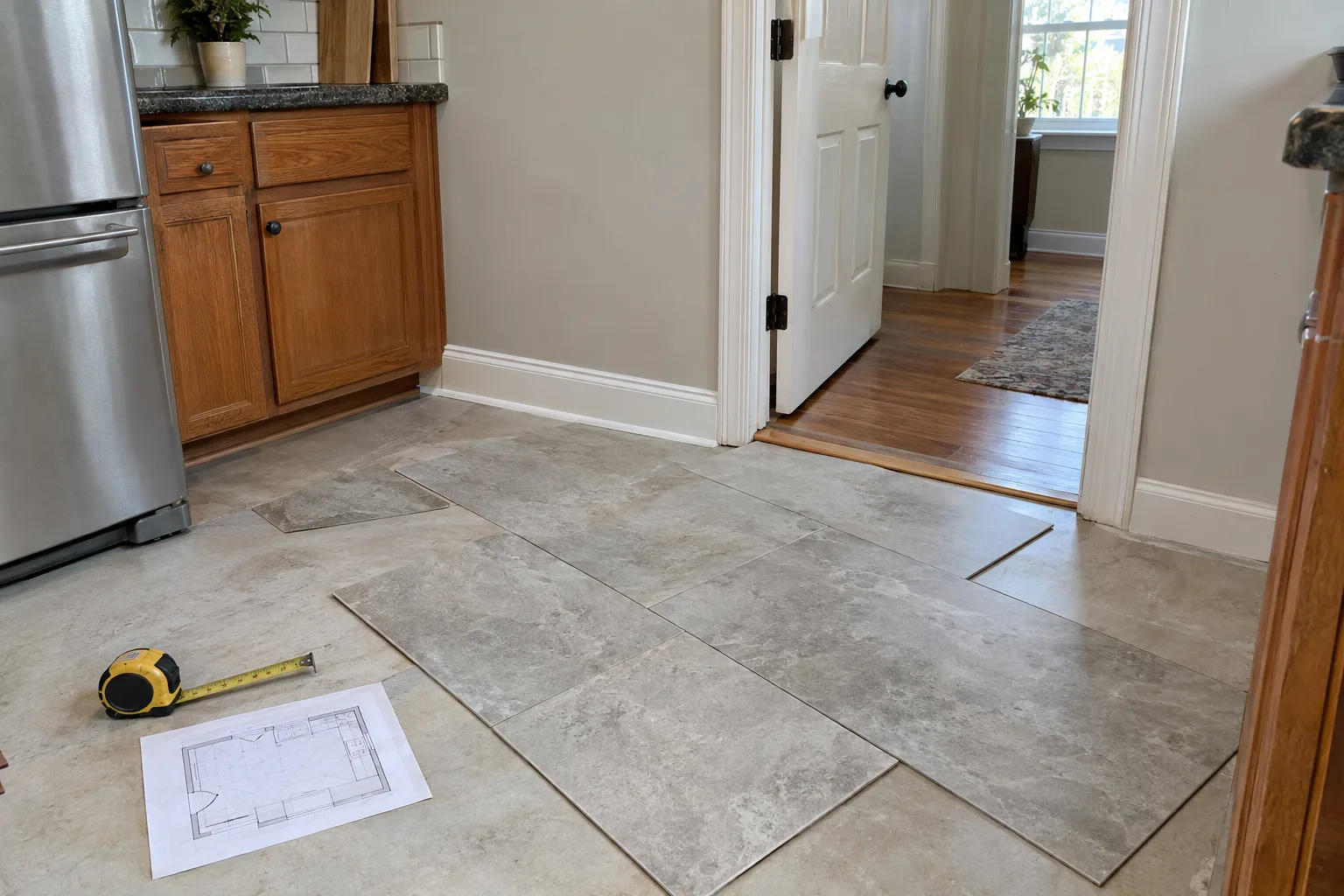
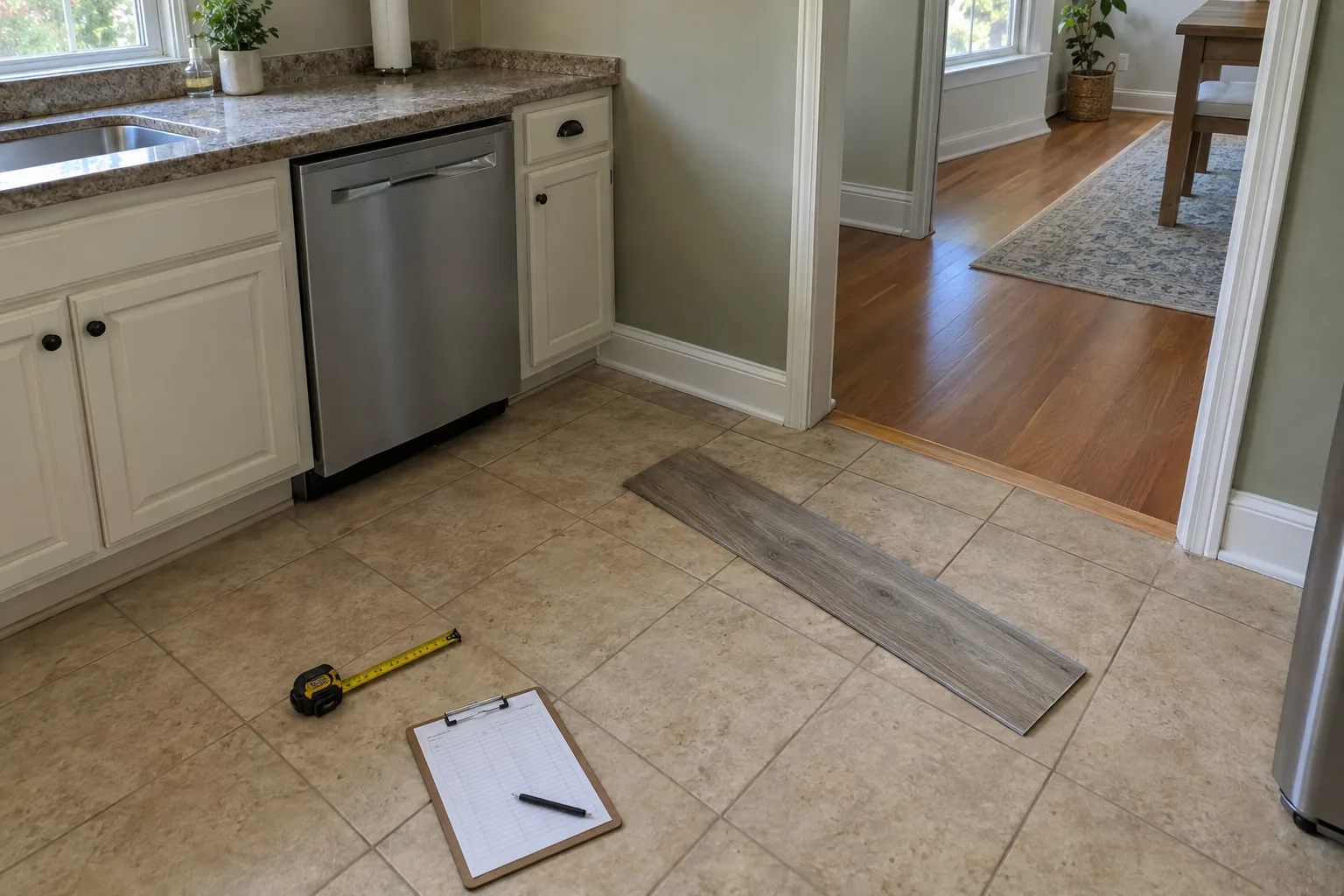
- How will it meet adjoining floors?
- What moisture checks does the selected product require?
- Could removing existing flooring reveal conditions that change the preparation needed?
COREtec's installation resources explain why the selected product's instructions matter. The subfloor needs to be clean, flat, dry, and structurally sound. Moisture checks also need attention.
Do not apply one flatness limit or acclimation rule to every vinyl plank. Ask which requirements apply to your selection. A water-resistant surface does not remove the need to investigate dampness underneath.
Know whether a mark is a scuff or a scratch
Shaw defines a scuff as material transferred onto the surface. A scratch is a scored mark. They are different problems.
Follow the care guide for surface marks. Do not start with abrasive pads or aggressive scrubbing. Deep damage may require replacement of the affected plank rather than cleaning.
Ask about keeping spare planks from the original order. The quantity should account for layout, cuts, installation waste, and the repair stock you want left afterward. Having the original product available avoids relying on a future search for a match.
Choose materials and prepare for installation
You can pick your floor at Baltimore Floor Works, 142 Railroad Ave., Westminster, or at Lowe's or Home Depot. You can buy it yourself, or Mike can order the floor you picked, usually through Baltimore Floor Works. Mike does not bring samples to your house.
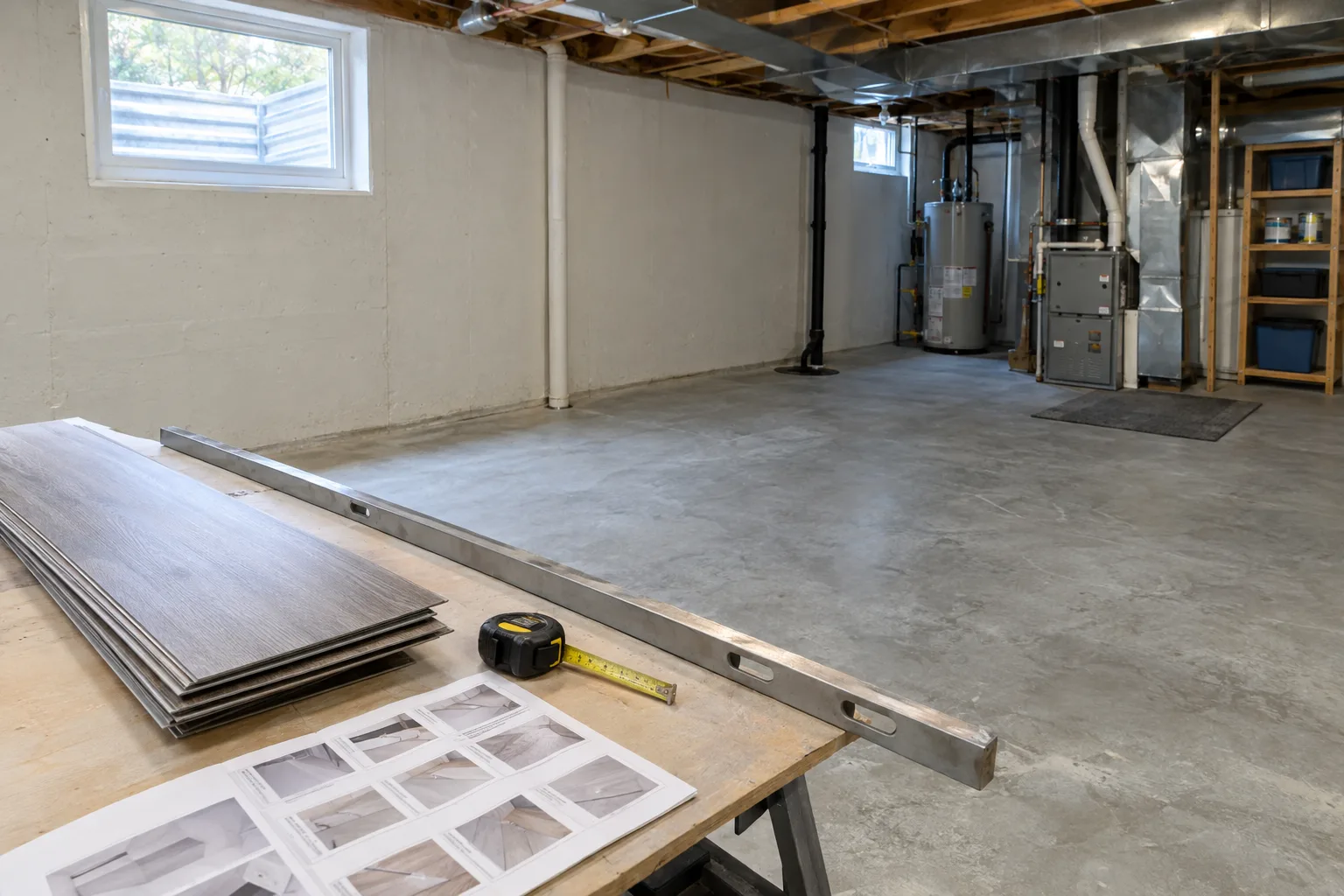
Before delivery, confirm the material quantity, storage requirements, and any product-specific acclimation instructions. Arrange a secure space for your dog away from tools, removed flooring, and open work areas. Ask when pets can return based on the installation method and materials used.
Mike has installed floors for 31 years, since 1995, and serves homes within about 50 miles of Taneytown. Current rates are on the pricing page. The estimate tool shows a preliminary range that is not a contract.
Call or text (410) 259-7094 to discuss your rooms, your dog's routine, and the product you are considering. Leave a voicemail if nobody answers.
Questions people ask
Does vinyl plank flooring scratch with dogs?
Yes. Dogs can scratch vinyl plank, even when the product is described as scratch-resistant. Nail care, regular grit removal, and suitable furniture protection can reduce the risk, but they do not make the floor scratch-proof.
What wear-layer thickness should you choose if you have a dog?
There is no single minimum that suits every dog household. Compare the exact product's wear layer, surface treatment, care instructions, and installation requirements rather than choosing by one number.
Is textured vinyl plank non-slip for dogs?
Some textured products may provide additional paw traction, but not every vinyl plank is non-slip. Compare the actual surface and plan suitable mat placement where your dog stands up or changes direction.
Should you keep spare vinyl planks?
Discuss spare planks before ordering. Deep scratches may require replacement of an affected plank. Confirm how the order accounts for cuts, installation waste, and the repair stock you want remaining after installation.
Sources
- Ranking page inspected: Floors for Paws, The ultimate pet-friendly flooring guide (2026 Edition)
- Ranking page inspected: Deerfoot Carpet & Flooring, 5 Reasons Why Luxury Vinyl Plank (LVP) is Perfect for Pet Owners
- Shaw technical bulletin: Prevention of Scratches/Scuffs on LVT
- Shaw technical document: Understanding Wear Layers & Topcoats
- Karndean: Family-Friendly Flooring
- Karndean: Cleaning and Care
- Shaw: Luxury Vinyl Care
- COREtec: Installation & Maintenance
- COREtec: Drop and Lock Installation Instructions, product-specific guidance